Macular Degeneration Treatment
Treatment for AMD
Macular degeneration treatment for dry macular degeneration is different than it is for wet macular degeneration. First you need to find out what kind of macular degeneration you have.
Treatment for macular degeneration consists of traditional medical therapy as well as complementary therapy. As in any disease condition, making healthy lifestyle choices can impact the health of one's eyes and one's vision. There are limited treatment options for those with dry and wet age related macular degeneration (ARMD). How do you determine what is the best treatment for you? If you are like me, you want to know all of your options and then find out what are the benefits and what are the risks for each of these therapies.
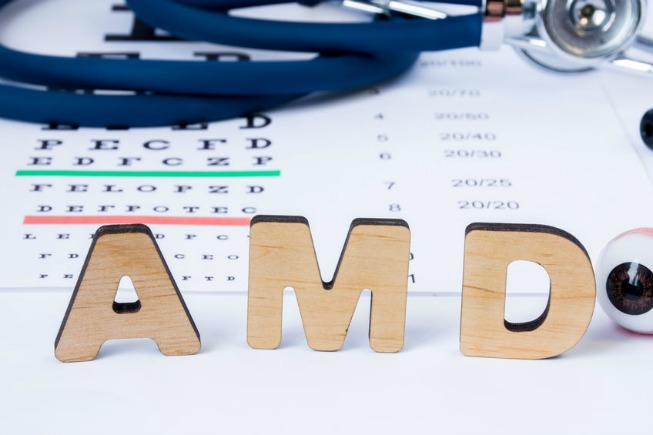
Check out the different treatment options for macular degeneration and discuss them with your eye specialist. Together you can evaluate the pros and cons of possible treatments for your type and stage of macular degeneration.
Treatment for Dry Macular Degeneration

The vast majority, almost 85%, of macular degeneration cases are the dry or atrophic form. Usually this type of ARMD progesses slowly. There are three stages of dry macular degeneration. They are:
early
intermediate and
advanced.
Although there is no surgical or pharmaceutical treatment for this eye condition at this time, there are steps you can take to possibly slow its progression.
Learn more:
Treatment for Dry Macular Degeneration
Treatment for Wet Macular Degeneration
There are more treatment options for wet macular degeneration than there are for dry macular degeneration.
These macular degeneration medications help to dry up leaky blood vessels and help to prevent further bleeding in the macula lutea . Can wet macular degeneration be reversed with any of these treatments? Sometimes. Eye injections of anti-vegf medications work by drying up the fluid in the macula area causing the once raised macula to lie flat. When the macula lies flat the distorted vision is improved.
The traditional treatment for wet macular degeneration include:
Anti-angiogenic injections using Lucentis, Avantis or the latest FDA approved macular degeneration medication, Eylea.
To read more about these treatments for wet macular degeneration including alternative therapies such as acupuncture and microcurrent stimulation click here:
Wet Macular Degeneration Treatment
Alternative Therapy - Chinese Medicine
Are you wondering if your vision can be improved with alternative medicine? Acupuncture is a type of alternative medicine, that although it has not been proven in a clinical trial, there are case studies of patients seeing improvement in their vision.
Keep in mind that because this procedure is not FDA approved it is not covered by Medicare or other insurance providers. It is a traditional Chinese medical technique based on the principle that there are energetic pathways, or channels, throughout the body that influence our internal organs and other parts of our body.
Energy from these pathways comes to the surface at various points on the body, identified as acupoints. Each of these points serves then as a channel or tunnel to the internal parts of our body.
Extremely fine gauge needles are inserted at these acupoints, stimulating and activating the body’s natural healing abilities. Patients with wet and dry macular degeneration have used acupuncture as a treatment.
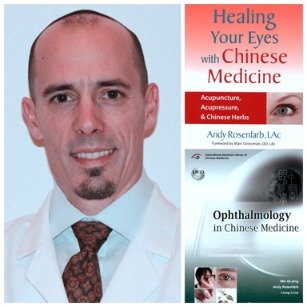
Andy Rosenfarb, ND, L.Ac. the author of Healing Your Eyes with Chinese Medicine, answers some of the most common questions people with AMD ask - such as:
Can my vision be improved?
Can the effectiveness of the treatments be measured?
How many sessions are needed for treatment?
What if the therapy doesn't work for me?
Chinese Medicine with Acupuncture - Dr. Andy Rosenfarb
Reverse Macular Degeneration

Are you wondering if macular degeneration can be reversed? So did artist John Crittenden.
After being diagnosed with wet AMD in one eye and dry AMD in the other eye, John began taking Avastin shots.
When his vision did not improve, he began seeking out complimentary and alternative therapy to restore the vision he lost.
He shares his story here:
Can Macular Degeneration Be Reversed?
Integrative Macular Degeneration Treatment
Dr. Ed Paul, the author of Prevent & Reverse Eye Disease shares with WebRN Macular Degeneration readers the role of complementary treatment for macular degeneration.

As a low vision specialist he also gives us an update on some of the latest low vision technology to help those with macular degeneration maximize their usable vision.
Integrative Macular Degeneration Treatment - Dr. Ed Paul
Macular Degeneration Clinical Trials
All the studies for macular degeneration can be found in one place - at the National Institute of Health's website (www.clinicaltrials.gov.)
Learn more about current macular degeneration clinical trials and how to access them...
Macular Degeneration Clinical Trials
Nutrition to Support Macular Health

Do not underestimate the power of nutrition in the health of your eyes and your macula.
Better health leads to better vision.
Much of the current research for macular degeneration is in the field of nutrition - from antioxidants, to lutein supplements, to omega 3 fatty acids and carbohydrate consumption.
Click here to read more:
Nutrition for Macular Degeneration
Return to WebRN Macular Degeneration Home
√ Prevention of Macular Degeneration?
√ Tips for Daily Living?
√ Food Suggestions for a Macular Degeneration Diet?
√ Ideas on Visual Aids to Maximize your Sight?
If you said "yes" to any of the above, sign up for the monthly Macular Degeneration News.


