Low Vision Lighting Tips
Macular Degeneration Lighting for Visibility, Safety and Close Up Tasks
Low vision lighting can help you see details clearer and reduce your need for magnification. Lighting needs increase as you age and especially increase for those with dry or wet macular degeneration.
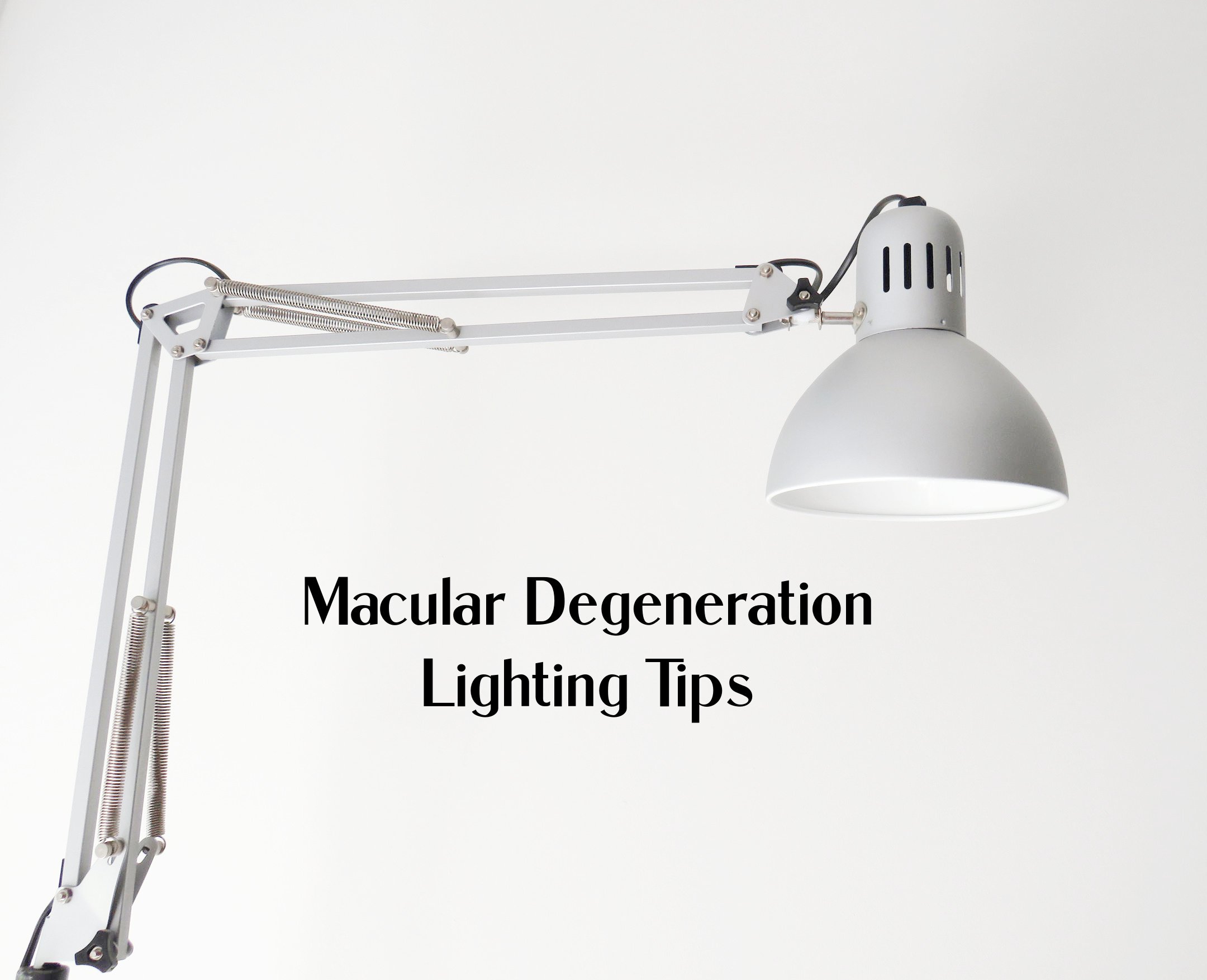
The right lighting can make a big difference in your ability to read, perform a hobby or safely navigate around your home.
Sometimes it's the simple things that can really make a difference in our lives - and providing good lighting might just be one of those simple things that you can do to make a huge difference.
Three Ways to Light Up Your Home
There are 3 ways you can take advantage of providing the right lighting for your home and your activities - they are general lighting, close up or task lighting and light we get from the sun.
Natural Light from the Sun
For some people allowing as much sunlight into their home is helpful
while others need to filter it because their eyes have become light
sensitive.
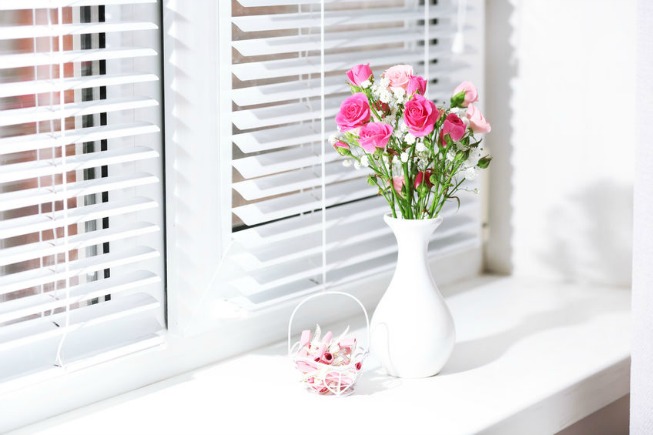
Window shades that filter sunlight can help light up a room but reduce glare.

For those who benefit from a sunny room, use it to do certain tasks like crossword puzzles, writing checks, or reading.
Place a chair near a window for daytime reading. Natural sunlight for reading can be helpful for some but not for everyone. Put your chair with its back against the window so that the sunlight falls onto your book or project.
General Low Vision Lighting
One of the most important things for you to know if you have macular degeneration is that - you need more light! Simple as that. You will need
√ more lamps around the house and
√ brighter bulbs.
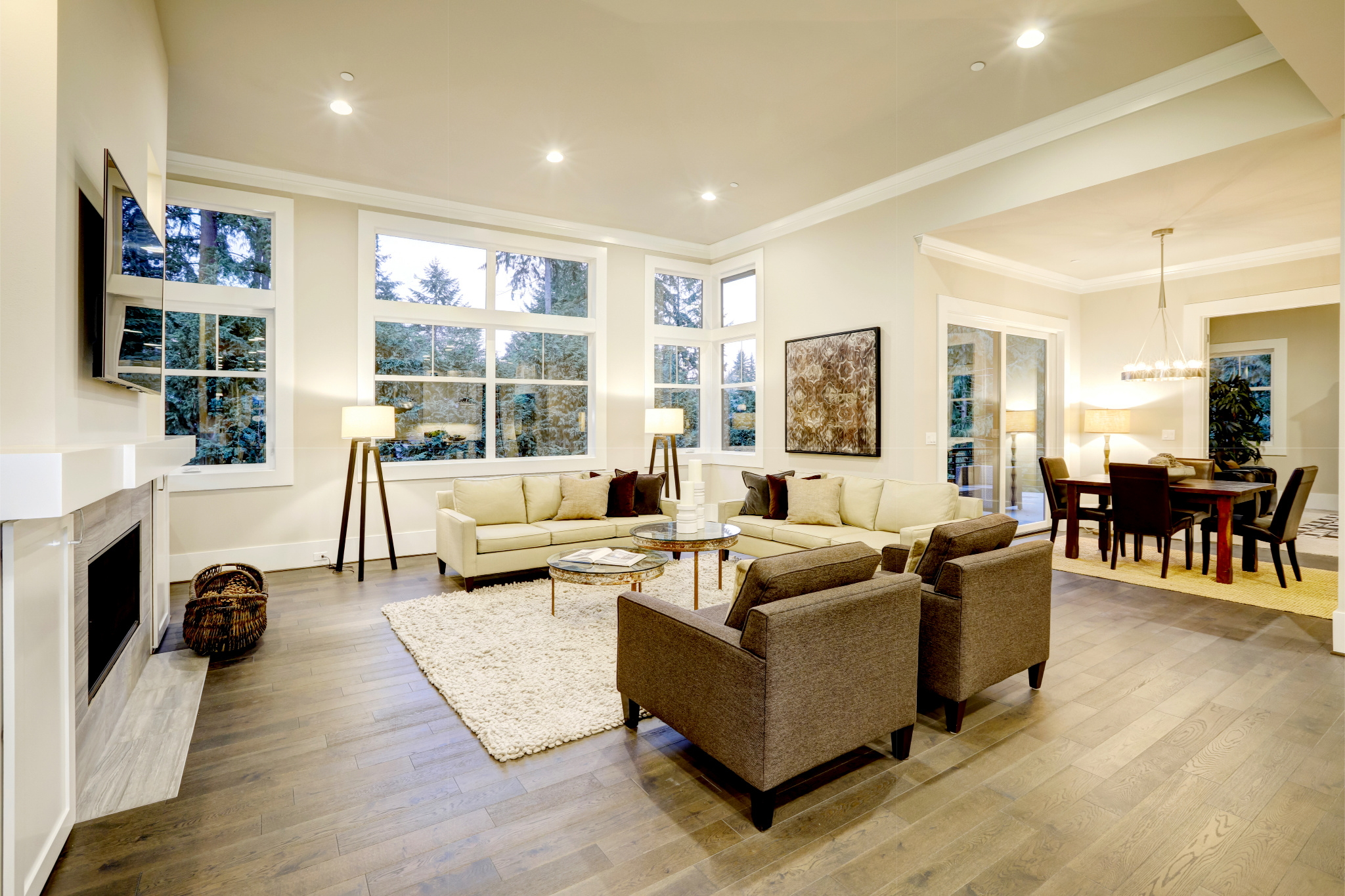
Lighting is not only important for near vision tasks, but also for safety and for getting around your home with better visibility.
Placement of Lamps
It's important that your lighting in a room is somewhat even with lamps positioned throughout the room rather than using one bright light with several dark corners.
Some links in the following sections are eBay or Amazon affiliate links, which means that if you purchase a product through them I receive a small commission. There is no extra cost to you. Find more details on this page.
It's also helpful to keep your house lit in hallways so that your eyes don't have to constantly adapt from lighted rooms to dark spaces.
Low vision light tips for the best lamp shades include:
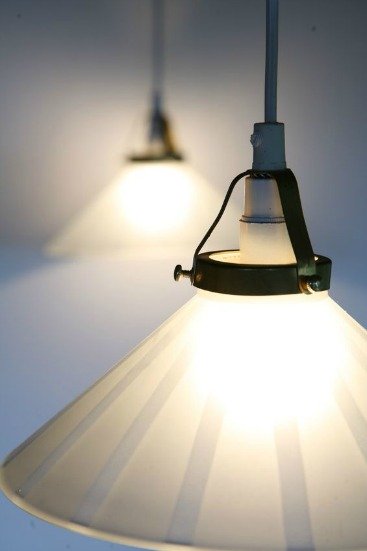
Use lamps that have a white shade rather than a dark colored shade for maximum brightness. Install dimmer switches so you can adjust the brightness of your ceiling or hanging lights.
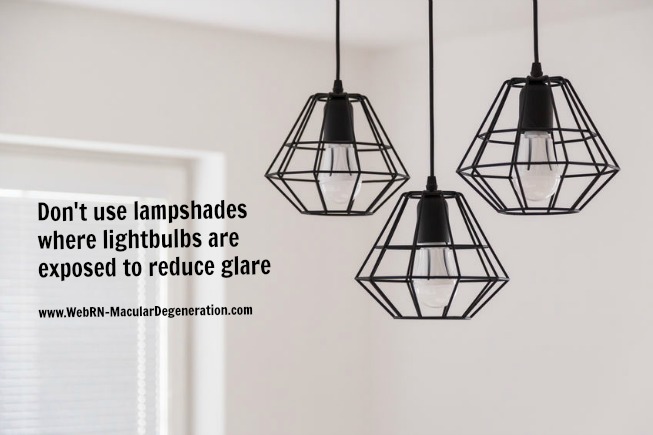
Don't use lamps or lights with exposed light bulbs. They create glare that can interfere with your vision.
More Lights and Better Lighting
Low vision lighting includes lots of light fixtures. Make sure you have ample light fixtures, floor or table lamps that ensure your safety - near
stairs,
hallways,
closets, and
around furniture.
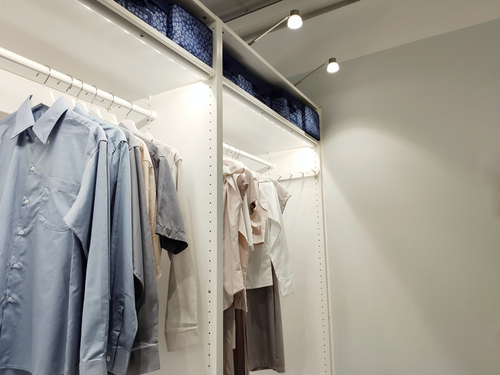
Many people find it helpful to put some lights on timers so that as it gets dark, rooms or hallways are automatically lit.
The halogen torchere lamp provides the best brightness for overall room light.
Use lamps that offer 3-way lighting. That way you can increase the lighting up to 150 watts for reading.
Get lamps that simulate the sun without the glareBlue Light Hazard - Indoors and Out
Many people are aware of the dangers of ultra-violet light, but unaware that another spectrum of light, called blue light may also impact the health of one's macula, especially those that have macular diseases or at risk for them.
Dan Roberts, the Director of www.MDSupport.org and author of The First Year: Age-Related Macular Degeneration: An Essential Guide for the Newly Diagnosed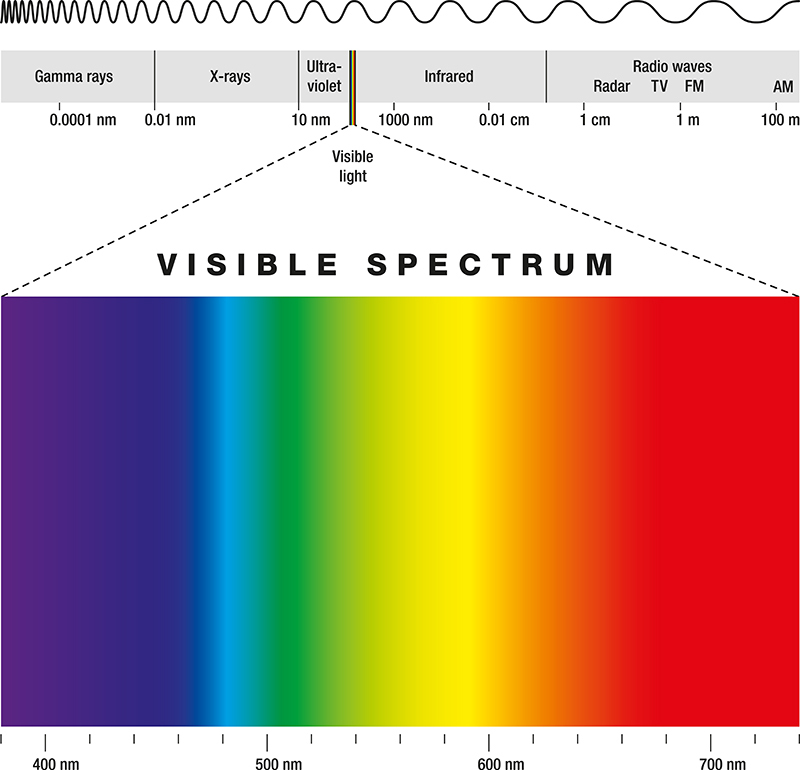
 , shares with us ow blue light affects the retina and how to protect your eyes from its damage.
What Light Bulbs are Best for Low Vision Lighting?
Use the brightest light bulbs recommended for each light fixture. There are several different kinds of light bulbs.
√ Fluorescent
Although they provide the brightest light, fluorescent lighting usually causes the most glare
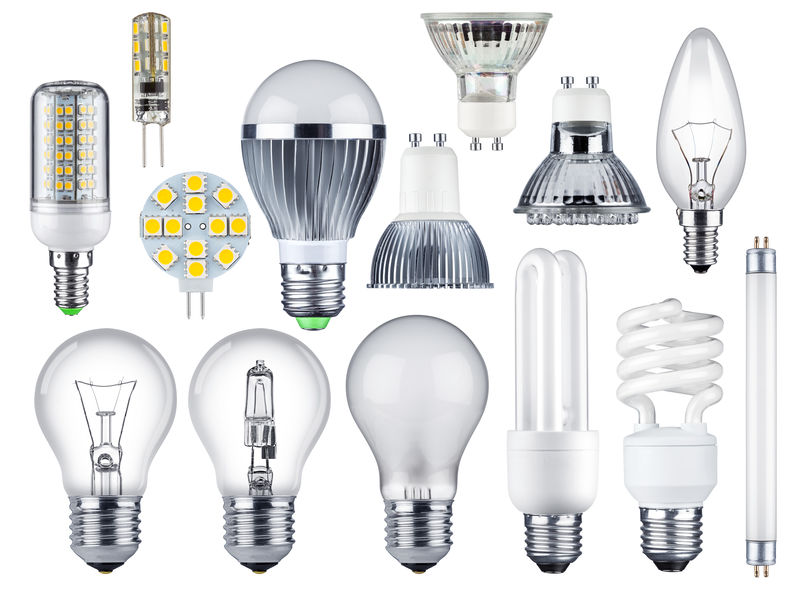
√ Halogen
Halogen bulbs cause less glare but they can be too hot for some lamps. Just like the fluorescent bulbs, halogen bulbs can only be used in halogen lamps.
As a desk lamp, they do provide the best "brightness." Many of the torchere lamps are halogen lamps and provide better low vision lighting to a room.
√ LED Lights
Provide bright, cool lighting and the bulbs last for thousands of hours
√ Full Spectrum Lighting
This lighting enhances color and contrast and mimics sunlight. However, some eye specialists warn against using full spectrum lights because it contains blue light which is known to cause damage to the retina.
Low Vision Task Lighting
The need for light is greater because of the degeneration of rods and cones in the retina. In fact some eye specialists state that those with AMD need four times more light than those with normal vision.
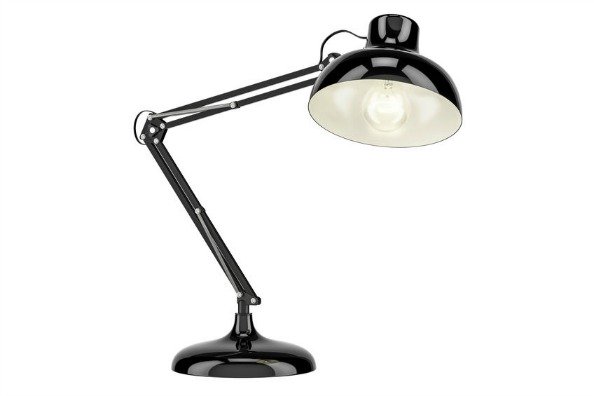
It is important that you use an adjustable or a gooseneck lamp so that the light can be directed onto your reading material or your hobby. Position the light so that it is directed or aimed right at your project or reading material. Often times with better illumination the need for magnification is less.
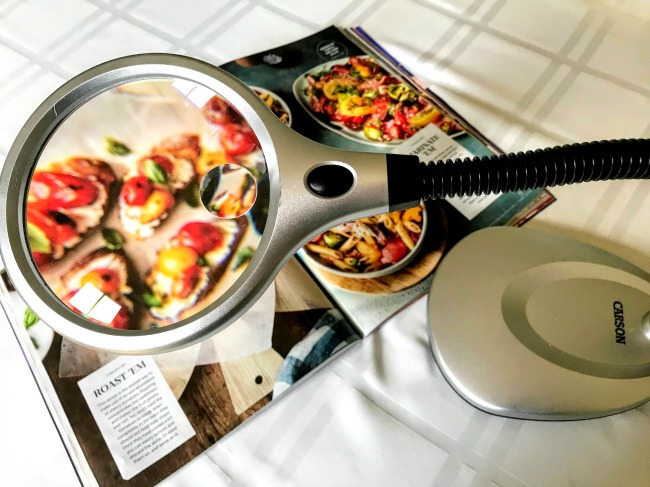
A gooseneck adjustable floor or desk lamp is best for detailed work. With this lamp you can bend the lamp to a position that directs the light to exactly where you need it. There are also clip or clamp on models so you can place one almost anywhere.
You can start with using just the lamp for extra light, but if you are still struggling to see you can opt for a magnifying desk lamp.
Halogen Desk Lamp
Peggy Wolfe the author of Macular Disease: Practical Strategies for Living with Vision Loss suggests "Look for a lamp that comes with a halogen bulb if you want really strong light."
Dan Roberts writes about his favorite low vision lighting at his desk; “For near-vision tasks, we placed white halogen lighting at my desk...”
A halogen desk lamp provides bright task lighting for those with macular degeneration. Halogen bulbs are brighter than regular incandescent or LED light bulbs which is why many people with macular degeneration (AMD) prefer these bulbs for their task lighting - for doing things like reading bills, writing checks and performing hobbies.
Many people find that this type of lighting also enhances contrast. Please be aware that halogen desk lamps can get very hot. The instructions will tell you not to leave the lamp unattended and do not place it near anything that is flammable. You may have to experiment to find the type of light that works best for you.
Gooseneck Floor Lamp with No Magnification

 A gooseneck floor lamp can be placed next to your favorite reading chair or close to your bed for better lighting while reading.
This lamp uses a crisp white LED lighting which means you'll probably never have to replace the light bulb. The benefit to this type of bulb is that it doesn't generate heat and stays cool to the touch.
Another nice feature for this lamp is that the light switch stays lit as a mini-night light, so that the light switch is easy to find.
Swing Arm Desk Lamp
Light that can be directed onto your reading material or hobby will help you continue to do the things you enjoy. Either an adjustable arm or a gooseneck will make it possible to position the light in a way that brightens up your reading page or task.
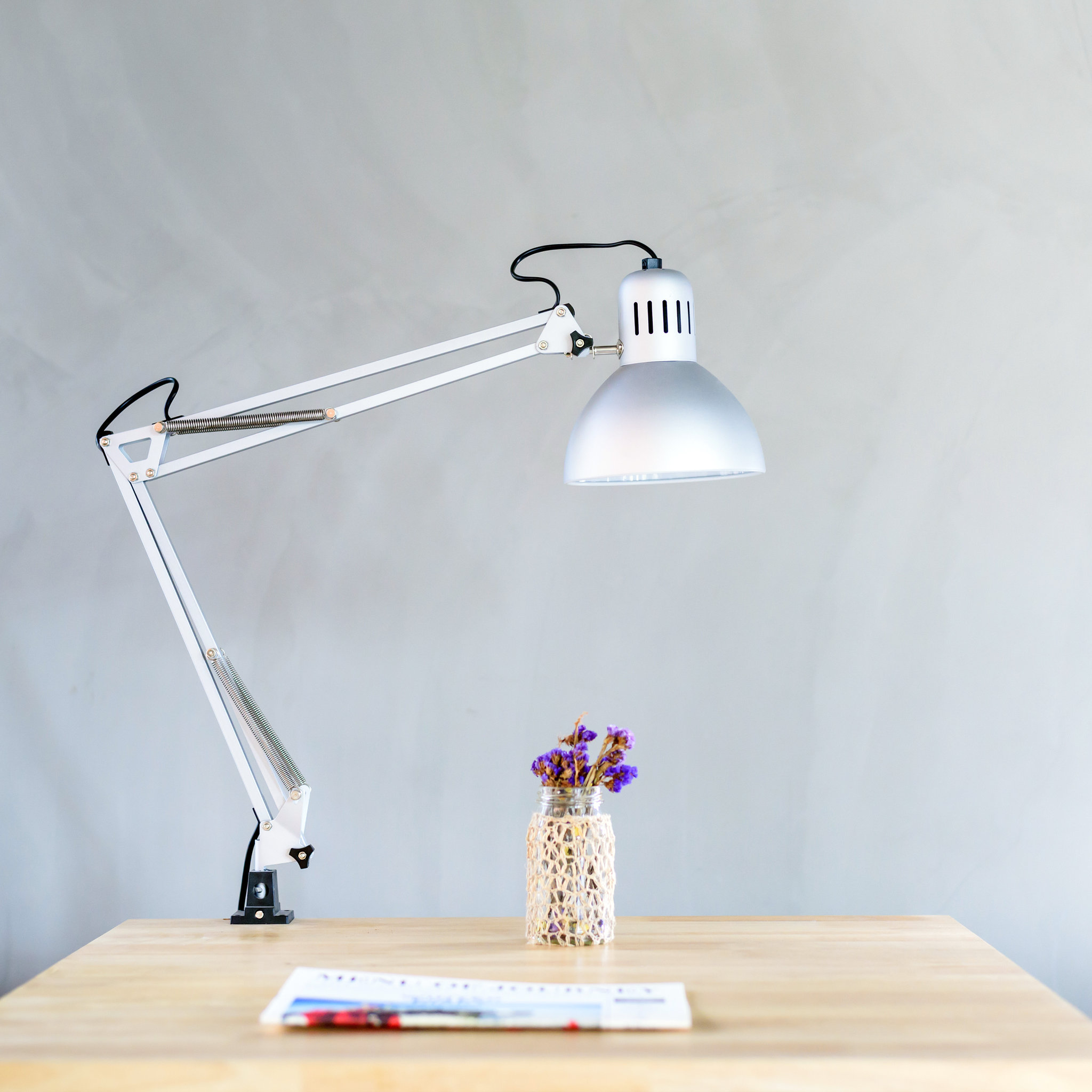
Less magnification is needed when task lighting is used.
The closer the light is to the object or material the better the illumination. The farther the light is from your task, then you'll experience less lighting and lower visibility. A few inches can make a big difference.
At one of our visits to see my father-in-law who has wet macular degeneration I was surprised to see that there were no swing arm or goose neck lamps. Just regular table lamps or overhead lighting were his sources of light.
To perform tasks like going through the mail, reading, or performing a hobby requires a lamp that has an adjustable arm. The light needs to be brought close and directed right near the reading material or hobby like this architectural swing arm lamp ...
Swing Arm Desk LampsThere are several styles of swing arm desk lamps - desk lamps that can be used in the office or as clamp on lights for the garage, work bench or hobby table.
Magnifying Desk Lamp

 If you are still having trouble seeing with better lighting and correct positioning of the desk lamp, then consider a swing arm magnifying lamp - a lamp that provides light and magnification.
The mounting clamp on this light is very sturdy while the swing
arm provides many different adjustable positions to make it possible to
do detailed work with less eye strain. A clamp on light can be used at
your desk, work bench or craft table which means it doesn't take up any
valuable space.
The LED lights last thousands of hours so there is no need to replace the bulbs.You can adjust the brightness with the tap of your finger to get the right lighting for your hobby or reading.
It has a 5" diameter glass lens and the arm can be positioned in any way that's needed.
Brightech LightView PRO LED Magnifying Clamp Lamp – DimmableFloor Lamp Magnifier
A floor lamp magnifier is a great visual aid to have for reading or for hobbies like sewing. Set it next to your favorite chair and enjoy reading again.
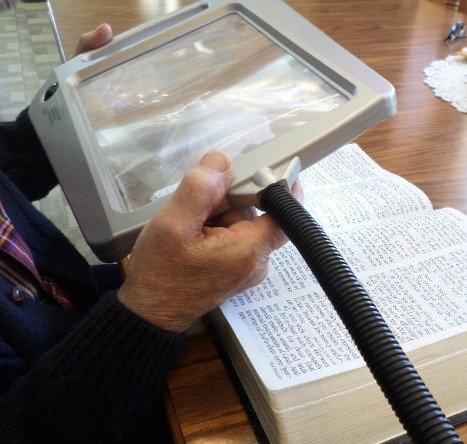
This lighted magnifier features 12 LED lights and a large, full page size magnifier that measures 8" by 10".
Combine that with 3X Magnification and you will find this combination may give you the light and magnification that is needed to enjoy your favorite books, newspaper or magazines.
Full Page 8 x 10 Inch Magnifying Floor Lamp
Flashlights and Motion Sensing Lights
My father-in-law who has wet macular degeneration won't go anywhere without his pen flashlight. There is nothing like taking "light" with you wherever you go.
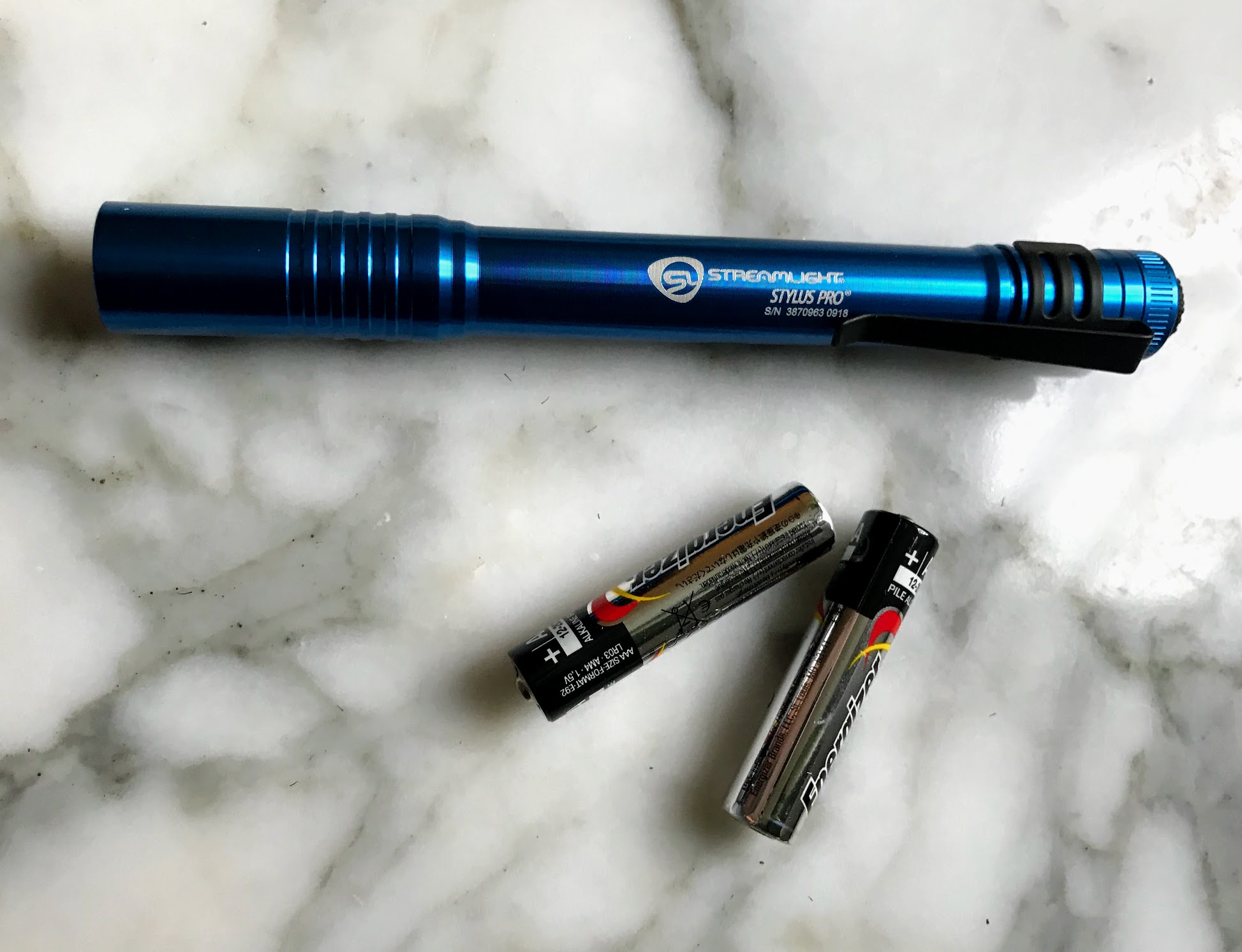
He uses it to help read a menu in a dark restaurant, check the buttons on the microwave or to find an outlet for a plug.
Wouldn't it be great if you could walk into a room and the lights would automatically turn on and turn off when you left? How about the front hall light going on when coming in at night or the laundry room would light up when your hands are full of dirty clothes?


Using motion detecting lights whether its light switches, stick up closet lights, this type of lighting is a convenient way to light up your way to prevent fumbling for switches when you enter a dark bathroom or hallway at night.
Motion Sensing Lights and Portable Lights That Go With You Wherever You Are
Change out your near vision lighting to lamps that can be adjusted and directed onto your task and add general lighting to dark areas such as under cabinets, near stairs or unlit corners of your house.
Go from Low Vision Lighting to WebRN Macular Degeneration Home
√ Prevention of Macular Degeneration?
√ Tips for Daily Living?
√ Food Suggestions for a Macular Degeneration Diet?
√ Ideas on Visual Aids to Maximize your Sight?
If you said "yes" to any of the above, sign up for the monthly Macular Degeneration News.


